
French authorities close Muslim youth camps
July 30, 2007
metimes.com
METZ, France -- Authorities in eastern France have closed down two youth summer camps run by Turkish cultural associations for failing to fulfill official norms, government inspectors said Monday.
A center at Courcelles-Chaussy was shut and 87 youths sent home Sunday night because of the "absence of educational or pedagogical project" and the lack of qualified staff.
The center was run by a cultural association based at a mosque in Strasbourg.
Last week authorities shut a holiday camp at Bains-les-Bains, after complaints that staff were enforcing a rigid religious discipline.
One child complained to police that he was forced to wake at night in order to pray.
Thursday, August 2, 2007

ECHR condemns Russia for slaughter in Chechnya's Novye Aldy and double murder in Gekhi

A Russian sapper searches a Grozny street for improvised explosive devices in June 2006 (TASS)
ECHR condemns Russia for slaughter in Chechnya's Novye Aldy and double murder in Gekhi
By Tomáš Vršovský
STRASBOURG, PRAGUE - The European Court of Human Rights announced today that the Russian authorities are guilty of a series of murders and other serious crimes committed by federal forces in the Chechen village of Novye Aldy on February 5, 2000. In addition, it held it responsible for the murder of two residents of the Chechen village of Gekhi committed by federal forces in August of the same year.
After reviewing the case -- "Musayev and Others versus Russia" -- the Strasbourg court upheld the claims of the five applicants and gave a unanimous ruling that several articles of the European Convention for Human Rights had been violated, in particular those concerning the right to life, the prohibition of inhuman or torture and the right to an effective remedy. The court ordered the Russian state to pay its victims compensation for material and moral damage totalling 143,000 euros and compensation for the costs and expenses of the hearings worth nearly 21,000 euros.
The interests of the applicants are represented by lawyers for the "Memorial" Human Rights Centre and the London-based European Human Rights Advocacy Centre (EHRAC). Human rights organizations held parallel press conferences in Moscow and Grozny today, and we will also publish a report concerning these.
According to information collected by human rights activists in the aftermath of the "mop-up" in the village, federal units in Novye Aldy killed several dozen civilians. They also engaged in looting, arson and rape. The Russian judicial system has so far failed to establish the identity of those guilty, and no one has been punished.
A second case on which a ruling was made in Strasbourg today involves two residents of the Chechen village of Gekhi, Ali and Umar Musayev, who were arrested by federal soldiers on August 8 2000 after an armoured personnel carrier was blown up nearby the village. A month later, in the presence of the Chechen authorities, the father of the Musayev brothers exhumed four bodies in the local cemetery, two of which were those of his sons and bore the signs of violent death.
After unsuccessful attempts to obtain justice in Russia, the mother of the victims, Aminat Musayeva, appealed together with her husband to the Strasbourg Court, which had accepted their complaint in 2001. In its decision today, the European Court ruled that Russia must pay the claimants moral damages in the sum of 130,000 euros and legal costs of 285 euros.
According to Prague Watchdog’s archive, five decisions have already been taken this year on "Chechen" cases. In all of them the claims of the applicants were met in full or almost in full.
____________________________________________________
A list of earlier rulings by the European court this year:
April 5: disappearance and death of a 61-year old Chechen man, Shakhid Baysayev, who was detained during a mop-up operation conducted by Russian police force units (OMON) in the Chechen village of Podgornoye in March 2000.
May 10: abduction and murder of Shamil Akhmadov, a Chechen resident who was arrested during a large-scale special operation in the city of Argun in March 2001.
June 21: murder of Chechen activist Zura Bitiyeva and her husband, son and brother, who were shot dead by unknown gunmen at their home in the Chechen town of Kalinovskaya in May 2003
July 5: abduction and murder of Ruslan Alikhadziyev, Speaker of the Parliament of the Chechen Republic of Ichkeria, who was arrested by federal soldiers in May 2000 in his home in Shali and then "disappeared".
July 12: murder of Chechen national Ayubkhan Magomadov, who was arrested by an armed unit of the Federal Security Service in October 2000 in his home in the village of Kurchaloy and then "disappeared".
Source: Prague Watchdog archive
Gay rights activist faces charges for outing politician

Gay rights activist faces charges for outing politician
2nd August 2007 11:35
Tony Grew
pinknews.co.uk
Nicolas Alexeyev, the gay rights activist and organiser of Moscow Pride, was charged with slander by Russian authorities yesterday and faces a criminal investigation.
The charges arise from comments he made on live TV in June, when he outed Russian MP Alexander Cheuv as a homosexual.
To prove that he is guilty of slander, Russian investigating authorities will have to demonstrate that calling Mr Chuev 'gay' spoilt his reputation or dignity.
Speaking on the talk show K baryeru! on 21st June Mr Alexeyev, who was convicted of a minor offence for his role in May's banned Mosow Pride march, outed the conservative MP.
Mr Chuev is one of the most outspoken opponents of gay rights, and has introduced proposals to the Duma to outlaw the "promotion" of homosexuality and ban "gay propaganda."
Mr Alexeyev claimed that Mr Chuev�s gay relationships were well-known in the 1990s before he became a politician, and called him a coward and a liar.
"We reached the most important thing during this TV show," Mr Alexeyev said at the time of his TV outburst.
"We showed all hypocrisy of the representatives of the present Russian authorities.
"They have secret homosexual relationships but at the same time they do all their best in order to slander gays and lesbians.
"I am ready to prove at any court or prosecution office that deputy Chuev is gay and to produce corresponding proofs."
It was the first time a politician had been outed in Russia.
Mr Alexeyev said that by charging him with slander, the authorities were "caught in their own trap."
"On the one hand they are saying all the time that no-one is discriminating gays in Russia and that there is no problem being gay and on the other hand they are investigating whether the word 'gay' can be insulting.
"Obviously not, because homosexual relations are not anymore prosecuted in Russia and homosexuality is not classified as a mental illness."
He added that the criminal investigation is an attempt to intimidate him into dropping a series of legal actions he is bringing against the Russian authorities in the European Court of Human Rights.
"It is clearly one other example of Russia becoming an authoritarian state where people do not have any right to express themselves and speak freely. And Russian authorities particularly do not like those who reveal bitter truth about them."
The Russian media have tried to link Moscow Pride with the exiled billionaire Boris Berezovsky in the last few days, with reports he was planning to give $100m (�50m) to finance gay Pride events throughout Russia.
Mr Alexeyev has two cases against Russia pending in the European Court in Strasbourg, one concerning Gay Pride ban in 2006 and another concerning his own dismissal from his postgraduate studies at Lomonosov Moscow State University because of his sexuality.
MEPs miss double chance to push one seat debate

MEPs miss double chance to push one seat debate
STRASBOURG: Two attempts to persuade MEPs to register their concern about the two seat of the European parliament failed on Wednesday.
Amendments put forward by German Liberal Alexander Alvaro and others concerning parliament’s 2008 calendar and the scope of the upcoming intergovernmental conference (IGC) were given short shrift by deputies.
Alvaro, who is head of the campaign for parliament reform calling for the scrapping of the Strasbourg seat, had asked MEPs to vote on an end to the Thursday sitting of parliament in the eastern French town.
The amendment was seen as a means of sending a clear signal about the need for reform, and was backed by many other MEPs.
British centre-right MEP Timothy Kirkhope MEP said he had supported Alvaro’s amendment.
“My support for a deletion of Thursday sittings is not in any way an alternative to the principled position I hold, which is to end Strasbourg sessions, but recognition of the fact that the treaties currently stipulate that 12 sessions must be held in Strasbourg.”
Some MEPs had taken the opposite stance, arguing that the Strasbourg session should be a full five-days, rather than splitting the five day period between France and Brussels.
German MEP Werner Langen led the call for a five-day Strasbourg – a move that would effectively make Strasbourg, and not Brussels, the single parliament seat, as it was in the past.
This, he said, would “give us the chance to have more speaking time and more public attention”.
“We are more members and more nations now, so it would be cheaper and more efficient to work more intensively in one week and leave the other weeks free for constituency work.”
But parliament’s plenary session voted to maintain the three-and-a-half day part session in Strasbourg 12 times a year, with MEPs refusing to get drawn into the one-seat debate at this time.
Alvaro had a second chance to push his reform agenda, inserting an amendment into the report by Dutch MEP Jo Leinen on the IGC, calling for the conference to also discuss the two-seat issue.
But despite a healthy round of applause from many MEPs in the hemicycle following the announcement of his amendment, the call was once again rejected.
Speaking to the press after the vote, Leinen explained that this was essentially due to the need to present a united front on the issue of the IGC.
Leinen was adamant that parliament should call on all national governments to stick their commitments made at the EU summit in Brussels – and that parliament adding new items to the IGC agenda at this stage would send the wrong impression.
But, he added, the one seat issue remained an important one for parliament, and the rejection of Alvaro’s amendments should not be seen as a lack of support for the move among MEPs.
A recent poll of MEPs by the parliament reform group showed widespread support for one seat for parliament, with most deputies supporting Brussels but a fair number supporting Strasbourg.
EU Parliament Slams Transdniester Rights Violations
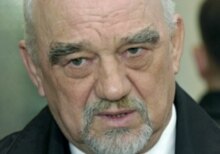
Moldova – Transdniester – Igor Smirnov, leader of Transdniester, Tiraspol, 27 March 2005. (TASS)
EU Parliament Slams Transdniester Rights Violations
BRUSSELS, July 12, 2007 (RFE/RL) -- The European Parliament has adopted a resolution condemning "severe and widespread" rights violations committed by the authorities in Moldova's breakaway region of Transdniester.
The resolution was adopted unanimously.
Deputy Marios Matsakis who presented a report titled "Human Rights Violations In Transdniester" before the European Parliament in Strasbourg, said a rapid settlement of the dispute between Moldova and Transdniester is needed.
"We strongly condemn the repression, harassment, and persecution of citizens and NGOs currently taking place in Transdniester, which is the work of the totalitarian Transdienistrian regime," Matsakis said. "And we call for a rapid settlement of the 'frozen conflict' in that region, pointing out, adamantly, that the territorial integrity of Moldova must never be put in doubt and that the regime in Tiraspol is illegal and unrecognized, and so it will remain in our eyes and in our decisions."
The nonbinding resolution also says the European Union must become a full participant in the now stalled conflict resolution effort currently involving Transdniester, Moldova, Russia, Ukraine, and the Organization for Security and Cooperation in Europe (OSCE).
Russia seeks to restrict flow of Chechen complaints to European Court on Human Rights

Russia seeks to restrict flow of Chechen complaints to European Court on Human Rights
By BAGILA BUKHARBAYEVA - Associated Press Writer © AP
Russia seeks to restrict flow of Chechen complaints to European Court on Human Rights
2007-07-20 19:42:29 -
MOSCOW (AP) - As Chechens win a growing number of cases against Russia at the European Court of Human Rights, Russia is planning to change its laws to allow its citizens to make their appeals at home.
But Chechens _ who say they are often subject to torture, summary executions, indiscriminate bombings and forced disappearances _ fear the government wants to deprive them of their only hope for justice.
Russian authorities have denied that military and security forces are guilty of atrocities in the southern Muslim republic of Chechnya, where two wars have been fought to impose Moscow's control. But they have restricted journalists' access to the area.
When Chechens go to police with allegations of abuse, their cases rarely make it to court, leaving victims with little choice but to appeal to the European Court of Human Rights.
The court, in Strasbourg, France, has issued at least 10 verdicts against Russia in the past few months in cases concerning the Chechen wars. Some 200 are still pending.
Rights advocates say President Vladimir Putin's government is irritated by the international exposure of atrocities in Chechnya brought by each new case.
Fatima Bazorkina's is one such case: Watching the news on Russian channel NTV in February 2000, she said, she saw a Russian officer ordering her son to be killed.
«Kill him, damn it. ... Get him over there, shoot him,» the officer said, Bazorkina recalled over the phone from her home in Ingushetia, a region bordering Chechnya.
Bazorkina has not seen her son, Khodzhimurad Yandiyev, since. Authorities said her son had been abducted by unknown men.
The officer Bazorkina said she saw ordering her son's killing, later identified as Col.-Gen. Alexander Baranov, has been promoted, according to the Stichting Russian Justice Initiative, which helps victims of rights abuses in the North Caucasus _ the troubled region that includes Chechnya _ seek justice at home and in Strasbourg.
The European Court ruled in March that Russian authorities were responsible for Yandiyev's presumed death and failed to adequately investigate.
The court said the suffering caused to his mother qualified as inhumane and degrading treatment and ordered the government to pay her ¤35,000 (US$48,400).
Russians have been able to appeal to the Strasbourg court since their country ratified the European Convention on Human Rights in 1998.
Russians now file more complaints with the court than citizens of any other European country. By the beginning of 2007, they had filed about 20,000 cases against the state, according to Russia's Constitutional Court.
Russia's Supreme Court said this week that lawyers will draft legal changes to allow Russians to file human rights cases against the state in Russian courts _ something they cannot do now.
«We are talking about reforming the Russian legal system in such a way that a number, a significant number, of the reasons our citizens turn to the European Court will be removed because of the availability of real and effective ways to protect their rights in their own nation,» Constitutional Court chairman Valery Zorkin said in an opinion piece in the official newspaper Rossiyskaya Gazeta.
He denied this would limit Russians' right to appeal to the European Court.
Magomet Mutsolgov, who filed a complaint last year over the disappearance in Ingushetia of his brother Bashir, said the planned changes were «an attempt to replace the European Court.
«It is an attempt to deprive the people in the North Caucasus of their last hope to stand up for their constitutional rights,» Mutsolgov said.
He said his brother was last seen in December 2003 as he was stopped by security officers at a checkpoint. There has been no official investigation.
«There are some Russian officials who want to improve the country's image and reduce the flow of Russian citizens' complaints» to the European court, said Ole Solvang, head of the Stichting Russian Justice Initiative.
«The right way to reduce the number of complaints (to the European Court) is not to allow abuses in the first place, and if they take place to thoroughly and effectively investigate them,» he said.
Solvang said Russian prosecutors do not refuse to investigate alleged government atrocities in Chechnya but investigations inevitably stall.
Gadhafi son says French arms deal key to medics' release; Sarkozy denies deal
Saif al-Islam, The son of Libyan leader Moammar Gadhafi
Report: Gadhafi son says French arms deal key to medics' release; Sarkozy denies deal
The Associated Press
Wednesday, August 1, 2007
PARIS: The son of Libyan leader Moammar Gadhafi said a deal to buy military hardware from France was a key element of negotiations that led to the release of six medics detained in Libya, the daily Le Monde said Wednesday.
But President Nicolas Sarkozy said no armament deals were concluded with Libya. The Foreign Ministry refused to comment.
Seif al-Islam Gadhafi also was quoted by Le Monde as saying an agreement for France to intervene militarily to defend Libya from security threats had also been on the negotiating table, but he was not sure it had figured into the final deal.
Under an accord partially brokered by French first lady Cecilia Sarkozy and EU officials, Libya released the five Bulgarian nurses and a Palestinian doctor on July 24. The medics, who had spent 8 1/2 years in prison, faced life sentences on charges they deliberately infected hundreds of children with the AIDS virus — an allegation they denied.
French officials have provided few details about the accord, but Seif al-Islam Gadhafi claimed it included the sale of French Milan anti-tank missiles for an estimated €100 million (US$137 million) and a deal on the joint Franco-Libyan manufacture of military equipment, according to Le Monde. It also included an agreement to conduct joint military exercises, he was quoted as saying, adding it was Libya's first military deal with a Western nation.
Sarkozy replied with a brusque "no" when reporters asked on Wednesday if any armament deals were concluded with Libya. When pressed about any such agreement in exchange for the medical workers' freedom, he said simply "none."
David Martinon, his spokesman, in a fuller reply later, said: "There was no armaments contract signed during the visit of Nicolas Sarkozy to Libya."
The Foreign Ministry had no comment.
Seif al-Islam Gadhafi — who heads the Gadhafi International Foundation for Charity Associations and was a key player in the negotiations — said the possibility of the security agreement had also been under discussion.
"But I'm not sure if that article was maintained in the (final) document," he was quoted as saying.
Libya — long considered a pariah state for its involvement in the 1988 bombing of Pan Am Flight 103 over Lockerbie, Scotland — has been attempting to end its isolation.
In 2003, it accepted responsibility for the Lockerbie bombing, which killed 270 people, and agreed to pay restitution to the victims' families. The Libyan leader also announced he was dismantling his nuclear weapons program, which led to the lifting of U.S. and European sanctions against the country.
The release of the medics removed the last major obstacle to Libya's rejoining the international community.
Sarkozy was quick to renew ties with the oil-rich nation, traveling to the capital, Tripoli, for talks with Moammar Gadhafi the day after the medics were returned to Bulgaria on a French presidential plane.
Following the meeting, Sarkozy announced an initial agreement to sell Libya a nuclear-powered plant. Sarkozy said the civilian nuclear technology would be used to desalinate sea water.
In the Le Monde interview, Seif al-Islam Gadhafi did not mention the planned desalination plant. He said that nuclear technology would allow Libya to export energy — possibly to Italy.
Speculation over French arms deal with Libya
The son of the Libya's Muammar Gadaffi has given a controversial interview to a leading French newspaper and caused a political storm for France's new president. Saif al-Islam has implied that the recent release of six foreign medics imprisoned in Tripoli was secured by an arms deal with France. Nicolas Sarkozy has agreed an accord on defence and signed an understanding for a nuclear energy deal. They were clinched when he went to Libya last week after helping to free the Bulgarian nurses. But Gadaffi's son, Islam, has suggested the two things are closely linked including a French sale of anti-tank missiles.
In Paris, journalists have been pursuing Nicolas Sarkozy asking if the two were connected? He responded with a definite "Non". The EU lifted its arms embargo on Libya in 2004 but it has effectively remained in place - until now.
Islam has also said that the case was connected to rumours that the man convicted of the Lockerbie bombing would be extradited to Libya. Abdel Basset al-Megrahi is currently being held in a Scottish prison. Britain has admitted it is working on a general judicial agreement with Tripoli including prisoner transfer but denies it will affect al-Megrahi.
Officially the release of the foreign medics - held for eight years for allegedly infecting Libyan children with HIV was achieved after funds were set up for the victims' families. Gadaffi's son says now their case is sorted out, new opportunities were arising.
Subscribe to:
Posts (Atom)